e-How offers ideas on how to start writing a diary or journal. The end of year holiday season offers time for social events and solitude, the perfect mix for observing and reflecting on one’s life and reporting the details in a diary.

e-How offers ideas on how to start writing a diary or journal. The end of year holiday season offers time for social events and solitude, the perfect mix for observing and reflecting on one’s life and reporting the details in a diary.
People often ask me about my travels and experiences in remote places. My travels are indeed varied — driving in an ancient Citroen across North Africa, camping out in scrubland or near the sea; climbing volcanos in Sumatra, Lombok, and the Moluccas; trekking in New Zealand; kayaking on Lake Biwa, Japan; and rafting and hiking in Kamchatka.
It all started with a passion for maps. 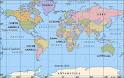
Some of those adventures became travel articles or were anthologized in travel books. One solo journey is recorded in detail in my book Pyrenees Pilgrimage, published in 2010.
I walked across France alone through the Pyrenees Mts. and foothills from the Atlantic Ocean to the Mediterranean Sea, a difficult and strengthening experience. I’ve planned other cross-country walking journeys which I plan to do in the coming years.
During the 1970s, I wandered North America extensively on multiple cross country trips by car, train, bus and occasionally, thumb. During one marathon drive, my siblings and father covered more than 9,000 miles in less than 10 days. We must have been driving night and day. I lived briefly in Missoula, MT, and for much longer periods in Santa Cruz, CA, San Francisco, CA and St. Petersburg, FL. During the 1970s and 1980s, I spent time in every lower 48 U.S. state and camped in National or State Parks in many of the central, southern and western states. I also visited Mexico and travelled across Canada by land a couple of times.
It wasn’t until 1992 that I visited Hawai’i and I’ve returned several times. Moloki’i and Big Island are my favorites, and Kaua’i is perfect. In 1993 I traveled along the southern area of Alaska, by sea on the state-run inland passage ferry on my way to Anchorage. On that trip, I was headed for a month- long stay on Kamchatka across the Bering Sea. That was when Alaska Airlines ran regular flights from Anchorage to the Russian Far East.
Other places I visited during the pre Reagan years include Sardinia, Sicily and Elba. With my companion, I traveled by bus or train and camped out on beaches or occasionally stayed in pensions or with friends. We traveled through Costa Rica for 2 months in the winter of 1982 and I visited South West France many times.
After I started working for the Washington Post and began writing travel articles for the paper and other periodicals (and later on, websites), my travel ramped up because a few short trips were at the invitation of foreign governments (such as Yugoslavia before their civil wars) or occasionally, I would have an assignment that included travel expenses paid by magazines.
Though most people assume the bulk of my travel costs were paid for by the Washington Post, that was never the case. I worked for the Post Travel section in a freelance capacity. Freelance writers know that magazines and newspapers usually don’t cover travel expenses.
I arranged my own long adventures with unpaid leaves of absence from work for long Asian trips during the 1980s and 1990s. Just as I had saved for my first solo trip in 1966, I habitually worked at two or three jobs to support my thirst for travel. I explored Kyrgyzstan and Uzbekistan in Central Asian on a trek with an outfitter in 1998, rather than going solo.
In all, I’ve spent time in more than 90 countries. I’ve lived (had an address, cooked my own meals, my own library cards and/or driving permits) in China, France, Mexico, Canada and Italy. During the years when I was living in Mexico and China, I was an employee of the US government. I paid for my travel within those countries.
In sum, the travel writer’s lifestyle requires economic prudence and that usually means the writer needs a job. Writing contracts that include travel expenses are infrequent. When the urge to travel is strong, a resourceful individual will find a way.
This was fun to write! I shared trade secrets about travel writing in the May-June 2011 issue of Writer’s Digest Magazine. Explain that turquoise facade on the building in the background? Location?
Llivia is a town under Basque Spanish jurisdiction yet it is completely surrounded by France.
Andorra is another Pyrénées Mountain region divided between France and Spain during 1276, as part of feudal settlement by the Bishop of Urgell and the Count of Foix. Their political descendants were the Kings of France and in current times, the President of the Republic of France.
Border specifics might not always be clear to the people, herds and horsemen in the area. Thousands of French troops migrated into Spain from the early decades of the 1800’s onward, starting but not limited to Napoleon’s invasion. Warning shouts and, if not heeded, shots, kept the traders and contraband runners inside the border lines of their respective countries.
19th c. Royalist France was trying to shut out disease (cholera) and liberal ideas. Earlier, Napoleon was bent on keeping France free of English colonial resources and soldiers. The area remained a hot spot, disputed particularly because surveyors and political forces didn’t know where one mountain range left off and the next began. What appeared to some observers as the northerly edge of the Pyrenees was actually the Corbieres range running from Narbonne on the Mediterranean coast, south west towards the Ariege. Constant battling and raiding caused village administrative and legal records or archives to be looted and burned. Sometimes there was intentional looting of church ledgers and records during anti-clerical phases, where many demographic records were recorded.
As soon as Egypt reorganizes its social scene for travelers, I plan to spend time in the Copt quarter of Cairo, at the Monastery of the Franciscans, the Chateau des Chandrelles (Assai-el-Chom) and the Hospital d’Abou Zabel.
These places are associated with the 19th century French pre-socialist group known as the Saint-Simonians. They bear this name in honor of the philosopher Henri de Saint-Simon who promoted the original idea of constructing the Suez Canal in the 18th century, along with other socially progressive concepts.
During the period 1832-1836, Suzanne Volquin (portrait at right) and several other women Saint-Simonians left France with St. Simonian men to work in Cairo and the environs, where they taught and nursed the local citizens. The composer Felician David was part of the community. The group was decimated by a cholera outbreaks during the 1830s and many of them were buried in the Copt quarter of Cairo. Suzanne Volquin traveled to Russia to teach mid-wifery there. She eventually emigrated to the United States of America.
Some of the French group stayed on or returned to work with de Ferdinand de Lesseps when he took over the Suez Canal project based in Ismailia and Port Said, places I hope to visit.As many of the group members came from banking families, they later participated in structuring early funding for the canal.
My purpose is spending time in Cairo and on various historic areas related to the construction of the Suez Canal will be to explore the history and to finish my manuscript about the French women and their work to establish a clinic and school for mid-wives.
Train on my way to Savannah, Gee A. Mix of people new to train travel and old timers who know the routines. Pervasive rings of mobile phones display the only creativity modern AmeriCan-Bandana allows: What is your ring-tone?
While most want to fill the space with sound, the rest of us are struggling to empty the sound from our space.
What is the next killer app people asked, back in the 1990s after Netscape, after Red Hat, after Af-Ta. The next one will be the one that silences everything. I don’t mean replacing ambient noise with an iPod generated music mask. My sound neutralizer is a variation of Baby Quiet ®, the helmet that prevents your attention deficient youngster from bashing its brains out against the cement wall in the day care center that wasn’t your first choice but will do the job.
Silence is more than golden. More precious than diamonds and not easy to obtain. When what is most precious is gone, the restoration costs more in terms of energy and effort.
Will Bose ®, the quiet headphones company sponsor a competion to improve and expand silence?
I found this quote: “Don’t speak unless you improve silence .” (Jesus Nebot) from this website Speaker Net News.
 “Every creative artist is a unique individual who has (her) his feet firmly planted in mid-air. He uses all his negative energies — tensions, anxieties and other vulnerabilities — and transforms them into rich reservoirs of positive forces, from which (her) his art emerges carrying with it the mystery and wonder of the unknown.” Michael Ponce de Leon
Who is Michael Ponce de Leon, I wondered, as I copied this quotation from an exhibition of Jung’s metaphysical work The Red Book at the Library of Congress, Autumn 2010? Clearly an artist who understands process of transformation, consciousness and catalyst creation.
The New York State Archives answered:
REELS N69-127 & N70-14: Correspondence relating to Ponce de Leon’s service as a cartoonist with the U.S. Air Force during World War II, his trip, 1967-1968, to India, Pakistan and Southeast Asia sponsored by the U.S. State Department to encourage better relations through art, his teaching appointments and exhibits; journal notes and writings concerning his trips to India, Cambodia and Thailand, his own work, teaching, Norwegian graphics and the art process; sketches and cartoons; sketchbooks containing figure studies, still lifes and sketches of Indian life; clippings, exhibition catalogs and printed material; and photographs of Ponce de Leon and his works of art. Correspondents include Elmer Davis for the O.W.I., critic John Canaday, art historian Jacinto Quirarte, and others.
UNMICROFILMED: A congratulatory letter from David Goddard upon receiving a Guggenheim award, 1967; photos and slides of Ponce de Leon’s work, a slide of him in a workshop, and photos showing his metal collage intaglio printing technique; exhibition catalogs and announcements, reprints, clippings, miscellaneous notes, three cartoon drawings, and an intaglio, “There’s a Time.”
35mm microfilm reels N69-127 & N70-14 available for use at Archives of American Art offices and through interlibrary loan. Material on reels N69-127 & N70-14 lent for microfilming 1969 and unmicrofilmed material donated 1977-1979 by Michael Ponce de Leon. Reels N69-127 & N70-14: Originals returned to Michael Ponce de Leon after microfilming.
Subjects: Prints — Technique — 20th century.; War in art.; World War, 1940-1945 — Caricatures and cartoons.; Hispanic American artists.
Follow in the footsteps of travel journalist L. Peat O’Neil. Markers for gîtes, country inns, farms and Cathar castles in the Pyrénées region of France.
Read more at: http://PyrénéesPilgrimage.Wordpress.com
Book is available through Amazon and soon to be released in Kindle version as well.
Coming soon…..Pyrénées Pilgrimage.…a travel adventure following author L. Peat O’Neil’s solo walk from the Atlantic to the Mediterranean through the Pyrenees Mts. along the French Pilgrimage path of Saint Jacques de Compostelle. Rend adventures and mis-adventures along the way including a stay in a local hospital after a broken wrist, interviewing survivors of the Nazi Occupation and private viewings of works by celebrated artists. The rarest event? A close encounter with two wild boars tusk-to-tusk in a highland field on a rainy evening. Were they playing or fighting over turf?
Recipe from: Pyrénées Pilgrimage, a travel adventure by L. Peat O’Neil, http://PyreneesPilgrimage.wordpress.com
Basque Country Soup from the Pyrénées Atlantiques Region
Garbure or potage is standard Basque fare, made every season. The ingredients change to what is locally in season. Fall, winter and early spring versions include root vegetables. Spring potage includes ripe fava beans. A summer version contains green beans, tomatoes, and new potatoes. The soup base is ham, white beans, and cabbage.
Potage — Garbure
4 quarts water
2 cups dried white navy beans, soaked in water for 8 to 10 hours
1 bouquet garni
1 pound ham shank (omit for vegetarian version)
2 medium carrots, peeled and coarsely chopped
4 to 6 medium potatoes, peeled and chopped into 1 inch cubes
1 medium onion, coarsely chopped
1 small cabbage, cored, and sliced into short strips or 1 inch squares
3 leeks, thoroughly washed, trimmed, and coarsely chopped
4 red peppers, cored and sliced into julienne strips
1/2 cup garlic, minced
1 tablespoons sea salt or more to taste
1/2 teaspoon freshly-ground white pepper
Place 4 quarts water, the white beans, the bouquet garni, and the ham shank in a large, heavy-bottomed saucepan over high heat. Cover and bring to a boil. Simmer for 15 minutes. Add the carrots, onion, potatoes, cabbage, leeks, garlic, and red pepper. Season. Return to a boil, lower the heat, and simmer, covered, for 30 minutes. Add more water if necessary. Taste and adjust seasoning. Cook until the vegetables are soft but not mushy. Remove the bouquet garni and ham shank. Discard the bouquet garni. Remove meat from shank and add to soup or serve separately.
–
Walking on the through the Pyrenees Mountains, the author tastes local food and wine. Includes distinctive recipes.
 e-Books are just right for travel -lightweight, infinite, a personal library. After CreateSpace handled the formatting, I uploaded the text and images for Pyrenees Pilgrimage, my recent book about walking across France through the Pyrenees Mts. It’s for sale in Kindle format on Amazon.
Follow the artists in France
The National Sporting Library & Museum's blog on all things sporting
Travel * Think * Create
Your Guide to Jamaica & Beyond
Where writers gather
A journal of literature and the arts
Arthur Klepchukov's Writing
stories & binge thinking
An Author of Many Parts
On the Red Road in South Puna, Hawai'i
62 Days....counting slow
Biographies, works and links of representative Mail Artists. - Biografien, Arbeiten und Links zu typischen Mail Art Künstlern.
Rosemary J Brown, author and journalist
Exploring Nature and Society
Famous, Infamous and Iconic Photos
 peat o'neil