Montgomery History expresses its sincere condolences to the families of George Floyd, Breonna Taylor, Ahmaud Arbery, and the countless others in our country who have lost loved ones and suffered from systemic racism. As an organization we are committed to using local history to build safer, more welcoming communities. We believe understanding and coming to terms with our history, including acknowledging past and present injustices, will help us move forward and realize the full potential of all the people who call Montgomery County, Maryland home.
Exploring our shared history, and the assumptions embedded within it, exposes a painful truth: the ideology of white supremacy did not die with the abolition of slavery. It festered and assumed new forms: Jim Crow laws, white terror lynchings, “separate but equal” practices, mass incarceration of African American men, housing discrimination, voter suppression, and violence against people of color. We must acknowledge that institutions traditionally associated with cultural memory, such as ours, have contributed to and supported white supremacist narratives in the past. So while some of the institutional structures of racism have been partially mitigated by legal rules, the root problem persists.
Montgomery History will continue to forge a new, more inclusive narrative that celebrates diversity and provides a platform for all voices to be heard. We ask that you join with us by offering your guidance and vision. Share with us your stories, your ideas, and your aspirations. We invite you to participate in telling the story of Montgomery County so that meaningful change, informed by our collective past, will emerge from our grief and disillusionment. We are optimistic that history will look back at this point in time and see a community that chose a path to the future rooted in empathy, mutual respect, and dignity.
-The Montgomery History Family
Admitting bias is first step. Thank you Montgomery History!
I was raised in Montgomery County, Maryland named for General Richard Montgomery a Major General in the Continental Army who was killed in 1775 during the Battle of Quebec during the American Revolutionary War. There were other earlier Battles of Quebec during the French and Indian Wars. I had to review these facts quickly. Thank you Wikipedia !
Could Montgomery History host a Wikipedia Edit-a-thon open to the community? During “Wiki-Thons” groups and individuals create content and upload open source photographs to Wikipedia during an intensive seminar that enhances learning resources about a particular subject. The history, communities, demography and diversity of Montgomery County, Maryland could be just such a subject. Volunteer mentors from the community who are Wikipedians assist the content producers.
About Diversity
There are many people living in Montgomery County – perhaps all Americans, truth be told – who represent an array of all the world’s indigenous gene pool. It has long been known that proving “racial difference” is a fog of nonsense by pseudo-scientists, mostly male, to perpetuate their social and economic position. Scientific racism endures, as this 2006 research analysis states, published by the McGill Journal of Medicine.
So, ‘fess up, admit it, everybody has many types and ties to different blood, genes and intellect. We inherit these traits and markers individually from our ancestors, not as a group. If you missed out on learning Biology or were prohibited by a church sect or cult from learning the Science of Evolution here is a glossary of terms related to genetic evolution.
Change Concepts :: Concept Changes
I am wondering, has Montgomery Historical Society or any historical society ever prepared an exhibition with a theme examining how we are all “colored people” ?
That was the polite term used to define and segregate citizens of all ages when I attended the Montgomery County Public School System in the 1950s. And there were other terms, bullying pejoratives that are still in trade.
Can the various community groups dedicated to supporting local history and honest, transparent education come together and consider a suggestion: Look into the historical association’s photo archives – and those of other local organizations. Seek out personal archives and collections dedicated to honoring historical documentation. Discover an array of materials that highlight the concept that “Blue, Black, Purple, Yellow, Red and Brown People are Normal People” are “We the People”.
The June 4, 2020 Statement at the top of this posting was sent by email; I could not find it on the Montgomery History website. As alluded to in the Statement, over the years, it is possible that intransigent curators and managers at the Montgomery Historical Society routinely ignored or did not actively search for images, oral history transcripts, artifacts and newspaper content that depict the normal day to day interaction of all kinds of local Montgomery County residents and visitors. Oh, except during Black History Month of course.
Or, they did, but few know about it. Admitting past bias is not enough. Though it is encouraging that the message was crafted and distributed.
Controversy and Disruptive Innovation :: If not now, when?
Has Montgomery History already mounted such an exhibition, created videos or amassed such a truthful resource as I describe? I admit, I have visited only once, in the late 1970s and saw the entrenched, staid focus on polite and white insular society. Has Montgomery History or the Maryland Historical Society ever offered an educational product or display exposing the rancid KKK and disguised fraternal supremacist groups that continue to exist in the county and state and country?
Has Montgomery History ever offered a program exposing the history of institution-based perpetuation of supremacy, which continues in these times?
When I participated in USG cybersecurity training and disruptive innovation simulations a decade ago, I learned that walking the perceived tightrope mindfully with a willingness to accept vilification, criticism and temporary failure during the process. Discord with positive intentions can bring a group into creative change and social advancement. History Societies could lead honest and transparent public education.
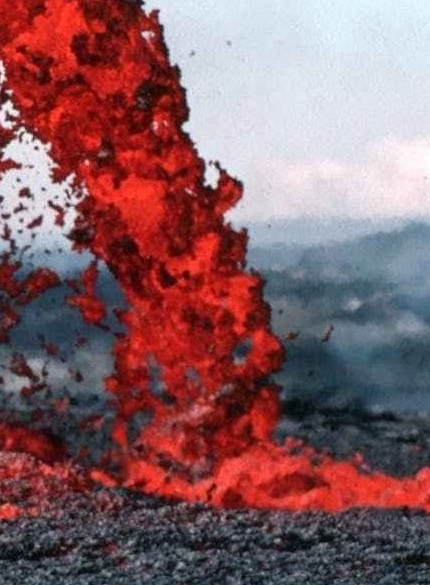
On December 10, 2018 a group of displaced Puna residents met at Nanawale Community Associationlonghouse to hear about the future of Highway 132 from representatives of the County of Hawai’i, the government entity for the region. Approximately 25-30 people attended from the 50 or more households with no road access to their properties surrounded by the lava flow that started in early May, 2018.
The county representatives began with a presentation about how they wanted the meeting to proceed. But the group would have none of that and in unison boomed out, “We want to know when will Route 132 be rebuilt! “
Many called out, “What’s the county doing to work with the geothermal plant contractors already pushing through lava to their facility?” Again and again, people spoke out, “When will we be able to get to our homes and farms?”
I had arrived early for the meeting and spoke with a representative of the County, learning that one of the goals for the evening was to “get people’s stories about the disaster.” This is part of an effort to reanimate news coverage and tourism after the lava flow that made countless people homeless and consumed acres of productive agricultural land, pastures and public recreational areas.
Individual stories, heartfelt examples of what the disaster has wrought on the community, families, individuals and institutions could be presented to state legislators, the county council or even the U.S. Congress to explain the extent of loss and begin to quantify needs to restore economic viability and human stability.
The County participated in the talk story meeting with those profoundly disadvantaged by the lava inundation to ask affected residents about how visitors — tourists — could better understand the impact of the lava and show respect for local culture and Hawai’ian traditions of respect. The county is gathering thoughts from school-age youth and local residents to create a Pono ethics code for the Hawaii Tourism Authority to convey to tourism industry stake-holders and their customers.
By communicating to visitors the challenges faced by locals during and after the lava flow, officials anticipate that tourists will have a better understanding of local people’s priorities and possibly reduce potential conflicts due to lava viewing or lava tours for visitors that stray onto local family land. The County of Hawai’i website now provides facts for potential tourists to the island of Hawai’i (aka Big Island).
I was reminded by a Kama’aina friend today that Pono is not an elastic term or concept, but a specific Hawaiian word meaning ‘righteous.’ Is this righteous advice to tourists or an expression of the righteous behavior that Hawaiians expect of tourists?
How to finance repairs of the roads and how to best manage the influx of tourists in search of lava viewing thrills are the thorny questions for which no answers were offered during the meeting.
Can the state and county redirect a portion of the tourism promotion budget to support Puna area institutions? Can a donation website and a Kickstarter funding platform be created to fund the road repairs and rebuild some of the Pahoa area recreational facilities damaged or obliterated during the lava flow?
Will advertising aimed at visitors feature stories of Puna residents affected by the lava? Are local institutional needs and road repairs enumerated anywhere?
Is it appropriate to encourage more visitors to the devastated area when dozens of families have no secure homes and cannot return to their property?
A social media platform where locals could share their disaster stories might illuminate the extent of loss and future needs. But how are these stories reported? Is accuracy and truth verified? Some may not want their personal experiences publicized to attract philanthropy or curious visitors.
During the talk story phase of the evening, I heard participants around the tables offer compelling and detailed accounts of divided families, financial loss, upset, expense, sadness, great loss, as well as mental and physical exhaustion. No one that I heard expressed that their lives have been improved by this experience and the outcomes. Many felt they’d been overlooked and ignored by the County of Hawai’i either as individuals, as families or property owners, or as a distinct group affected by the lava.
I wondered if the representatives from the various social assistance agencies who wrote notes as people shared their stories actually get the facts. Will the individuals have a chance to review their stories before they become human-interest examples to attract budget increases? Were the oral stories accurately reported? If these stories become part of a proposed social media platform showing how affected residents are building resilience, will individuals be able to review the content before it is made public or used in appeals to state or national legislators? As one mother stated, we residents are already demonstrating the strength and resilience described in branding phrases I noticed on handouts and other materials: Puna Pono and Volcano Eruption Recovery.
In the end, nothing concrete was offered regarding the rebuilding of Route 132 except that a Risk Assessment will be done by the Univ. of Hawaii Manoa. The “risk” being the potential liability of the road-builders on the Route 132 area. Will they encounter hot zones, active lava, lava tubes, re-eruption, and other hazards.
I hope the Risk Assessment team are not just keyboard desk jockeys with spreadsheets working on another island. I hope they consult onsite vulcanologists
and geographers and social scientists and community-based psychologists. There is more at risk than what the lava presents.
It’s time for an end to the slow-walking and expecting residents to solve their own access problems. Distracting the affected people with platitudes and soft strategies like story telling, identifying community needs, or school involvement, instead of providing direct leadership and specific actions. Public road building is the responsibility of the local government.
No building is big enough to hold the documented and undocumented malfeasance of politicians and their money-bag cronies. Mr. Big, and Mrs. Big too, built their short-cut to the big-top on a pile. They usually don’t get caught; throw their myrmidons out as distraction bait.
The Museum of Political Corruption will be located in Albany, a city-state capital thought to be the bedrock of American political corruption. Maybe the museum library will be interested in maintaining print and digital archives of reporting on political corruption. Some writers and journalists have deep troves of subject files long predating the Internet.
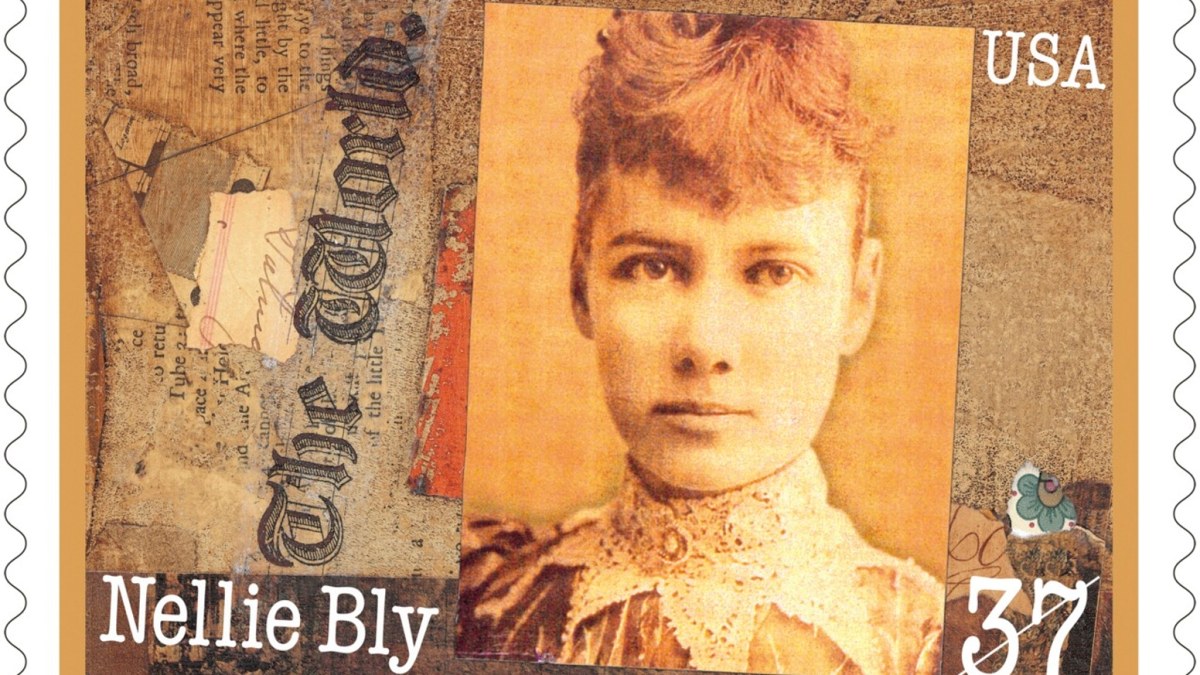
Fortunately, investigative reporters like Susanne Craig of The New York Times are on the case. In May, 2017 Susanne Craig was named first winner of The Nellie Bly Award for Investigative Reporting.
The Museum of Political Corruption established the Nellie Bly Award to recognize the vital role investigative reporting plays in government oversight and maintaining an informed electorate. The award is named after late 1800s pioneering investigative reporter Nellie Bly.