|
|


National Rail Networks :: A Look Back in Time
The world’s first national rail networks were constructed in Britain, with the first inter-city line connecting the industrial midland city Manchester with the port of Liverpool in 1830.
So, are you wondering, which country forged a national rail network next? France? Sweden, the United States?
It was Egypt. The Egyptian rail system connected ports on the Indian Ocean to the Mediterranean Sea until the Suez Canal was opened in 1869. Egypt’s rolling stock is still on track. A recent issue of Future Rail magazine reports on Egypt’s recent purchase of 1,300 new carriages.
U.S.A.
In the 21st century some countries like the United States of America are not keeping up a commitment to passenger rail systems.
That’s a shame because rail travel offers faster, more efficient and ecologically favorable long distance travel than commercial airlines or private vehicles. Assuming, of course, the nation-state or region maintains and supports its railway systems.
A close look at an inventory of Amtrak rolling stock looks like an old used carriage auction block. Check out the fancy Amtrak advertising videos promising sleek, fast locomotives in the northeast corridor of the country, the most reliable profit center. Don’t wait in line or online for a ticket because it’s fantasy at this point. Why aren’t the U.S. leaders embarrassed by their poor showing compared to the lightning speed trains of Japan, France, Germany and other European countries?

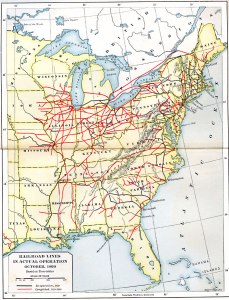
Back in the mists of time, the northern states of the U.S. had established a robust network of rail lines that connected with existing waterway transport and ports before the American Civil War. The southern states also built railways, but the lines dead-headed inland rather than featuring radiating lines that used hubs to interconnect with other railways. The absence of a connected rail network in the south was a factor in defeat.
President Abraham Lincoln signed the Pacific Railway Act into law on July 1, 1862. This progressive action authorized construction of the Transcontinental Railroad. American continental railroads, built by immigrant laborers, usually under cruel and dangerous conditions, were instrumental in opening the western wilderness to travel and trade.
FRANCE
I’ve spent more time and kilometers riding the SNCF railway system in France than any other country. My first rail trip there was in 1966 on the boat-train from Calais (or was it Boulogne?) to Paris. The wider-gauge British trains left passengers at the ferry dock and after the Channel crossing, you’d walk to the French carriages for outward bound destinations. In the past I would ink my train travel routes on a map of France but the lines crossed and recrossed over the years to the point of obliterating the journeys and connections.

France built short rail lines to serve the mining industry. Agricultural communities resisted rail development arguing it would infringe on France’s well-organized transport network of canals and other waterways. Construction of long distance rail systems for commercial and consumer use started after 1842 with a network that could move goods for long distances overland.
RUSSIA
Russia, with distances far greater than the U.S., opened a single railway line from Moscow to St. Petersburg in 1851. With more land distance than the U.S. to cover, and few or no western and southern ports, Russia understood the value of connecting the capital and to ports in the Far East. Russia opened the Trans-Siberian Railway in 1916, though portions of the railway were functioning as early as 1903.
MEXICO
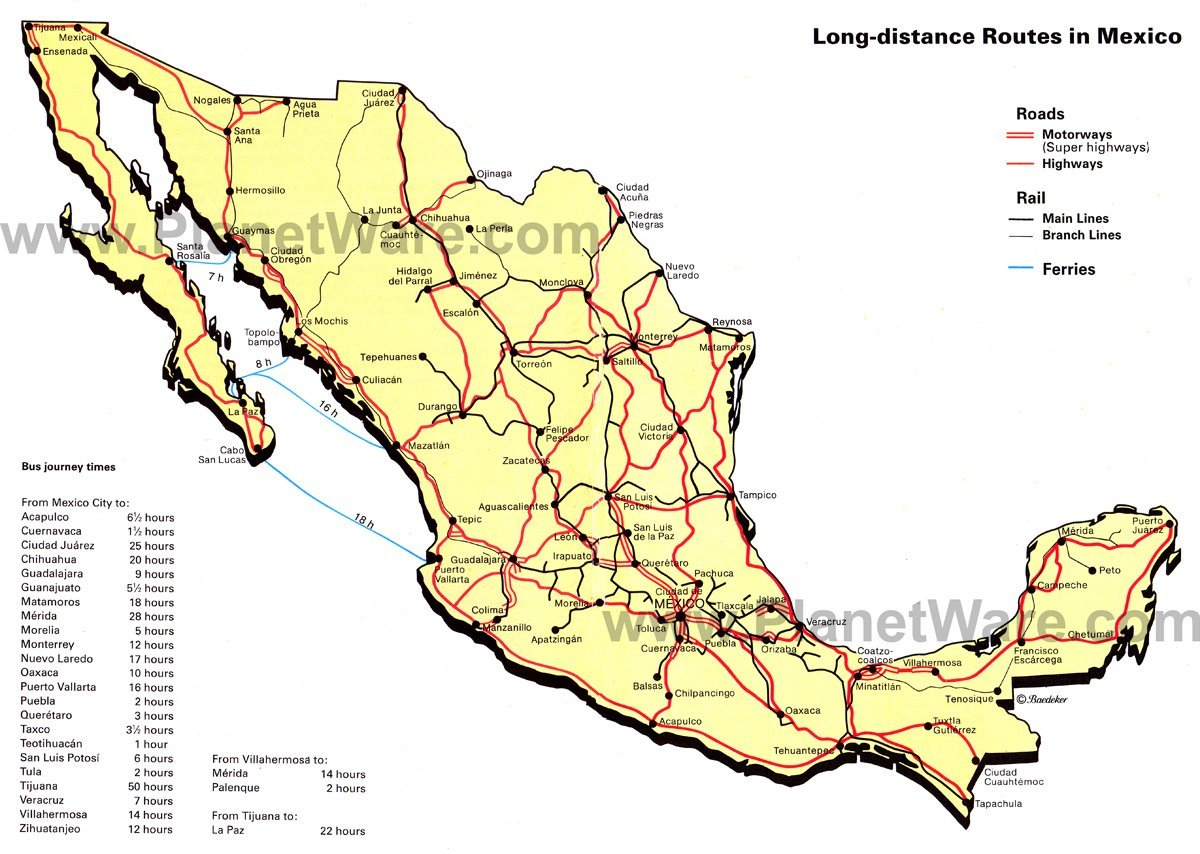
My experience with Mexico’s Railway Network is limited. During the early 1980’s, possibly 1981, my friend Don Tito and I boarded the Mexican railway by taking a Greyhound or Trailways bus from San Diego to El Centro, California and walking across the frontier to a train station in Mexico. I should consult a travel diary from that year to report the distances and ticket cost. I do not recall seeing a border wall at that time. The Pacific and Southwest Railway Museum in Campo, California owns carriages and locomotives of the San Diego and Arizona Railway that resemble the historic rolling stock we rode south through Mexico in 1981.

We boarded the Mexican long distance train at a town just steps across the border that took us all the way south to Mazatlan, a gritty seaport opposite the tip of Baja. I do not need to see again. The train ride took two days and nights. Or maybe it just seemed that long. It slowed to a long halt at towns so locals boarded to sell tamales, soft drinks and chiclets out of plastic buckets lined with heated towels to keep the food warm.

Decades later, I lived in Mexico City and wanted to explore the country by train, but during the 1990s, the government had consolidated or terminated most passenger rail systems. Apart from a couple of tourist trains that run limited, scenic routes and a commuter rail system serving the capital city, Mexico’s passenger rail service is a distant memory.
Occasionally, proposals arise to create new passenger rail lines or high-speed rail links between major cities. But proposals are not reality. Until some future date, the inter-city express bus service is adequate, sometimes stellar, but environmentally inefficient.
Ride on, rail enthusiasts!
Check the transparency and ethics of government and corporate management daily. Maybe hourly?
Teachers, create a popular lesson by displaying the reach and excesses of political corruption all the way into the classroom.
Random browsers, visit the Facebook presence of the Museum of Political Corruption
No building is big enough to hold the documented and undocumented malfeasance of politicians and their money-bag cronies. Mr. Big, and Mrs. Big too, built their short-cut to the big-top on a pile. They usually don’t get caught; throw their myrmidons out as distraction bait.

The Museum of Political Corruption will be located in Albany, a city-state capital thought to be the bedrock of American political corruption. Maybe the museum library will be interested in maintaining print and digital archives of reporting on political corruption. Some writers and journalists have deep troves of subject files long predating the Internet.
Fortunately, investigative reporters like Susanne Craig of The New York Times are on the case. In May, 2017 Susanne Craig was named first winner of The Nellie Bly Award for Investigative Reporting.
Reporter Susanne Craig’s mailbox mysteriously yielded leaked pages from Donald Trump’s 1995 tax return. A former Albany bureau chief for The Times, Susanne Craig has also led investigations into allegations of wrongdoing in state government, such as New York Gov. Andrew Cuomo’s decision to shut down a much-heralded commission investigating public corruption.
The Museum of Political Corruption established the Nellie Bly Award to recognize the vital role investigative reporting plays in government oversight and maintaining an informed electorate. The award is named after late 1800s pioneering investigative reporter Nellie Bly.


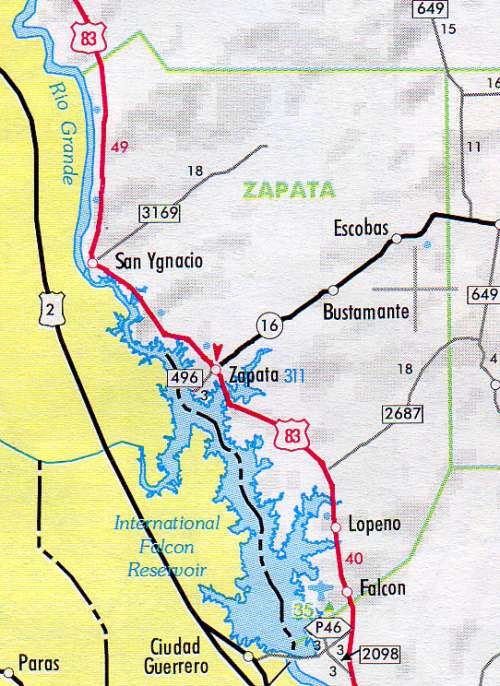
The 1953 dedication of Falcon Dam created a massive reservoir on the Rio Bravo del Norte, aka Rio Grande. Farmers and villagers were displaced on both sides of the river.
A city on the Mexican side was flooded, the inhabitants relocated to new homes built for them by the Mexican government.

Towns and farms on the U.S. side were also flooded, the inhabitants had to sue for relocation assistance and compensation, resolved — perhaps not equitably — years afterwards.
Reference: U.S. Congressional hearings on the dam.
Will There be Geothermal Electricity for Nevis?

In that 2009 article, it was reported that Kerry McDonald, CEO of West Indies Power (Nevis) Ltd., said “West Indies Power will now be able to start building the geothermal power plants that will supply Nevis and the other islands in the northern Caribbean with low cost, reliable, renewable, clean energy for the foreseeable future.”
They were off to a great start, but the momentum failed. In 2012, Time Magazine reported the project was stalled. By 2015, geothermal resources development for Nevis had advanced to the point that the Caribbean Development Bank was considering financial support.
Nevis plans to use its geothermal resources to generate electricity which could power air conditioning systems. Hot water could fuel cool air in resort hotels. As the IADB reported in 2013, tourism is the reliable artery that feeds the Nevis economy and hotels on the island consume a stunning amount of electricity powered mostly by oil with limited wind-generated power.
People have been tapping into geothermal energy for cooking and heating forever. Settlements near geyser fields made good sense to Stone Age ancestors. Think of geothermal as steam power sourced from Earth’s interior. The thermal energy is drawn from beneath Earth’s crust, at various distances below the surface. Jules Verne’s novel “Journey to the Center of the Earth” spins a story about traveling on the hot rivers of the surface deep into the earth’s molten rivers called magma.

Volcanic areas produce reservoirs of steam and hot water. In Iceland, steam is tapped for residential heat and hot water. Steam geysers are for visitors to enjoy in remote areas of Iceland, as at Yellowstone National Park in the USA and the Valley of the Geysers north of Zhupanovo on the Pacific coast of the Kamchatka peninsula in Siberia.
Follow the artists in France
The National Sporting Library & Museum's blog on all things sporting
Travel * Think * Create
Your Guide to Jamaica & Beyond
Where writers gather
A journal of literature and the arts
Arthur Klepchukov's Writing
stories & binge thinking
An Author of Many Parts
On the Red Road in South Puna, Hawai'i
62 Days....counting slow
Biographies, works and links of representative Mail Artists. - Biografien, Arbeiten und Links zu typischen Mail Art Künstlern.
Rosemary J Brown, author and journalist
Exploring Nature and Society
Famous, Infamous and Iconic Photos